Artificial Intelligence (AI) is rapidly changing both software development and the capabilities modern applications can provide. At WCG, we view AI as both a powerful development tool and a practical technology that can enhance real-world business systems.
Our team has always learned by building and applying new technologies in production environments. As AI technologies evolved, we began integrating them into both internal projects and customer-facing solutions to better understand where they provide measurable value.
AI in Software Development
Our initial work with AI focused on machine learning and image-recognition APIs. As large language models became widely available in 2023, we expanded into AI-assisted software development and AI-enhanced application features.
Today, we use AI technologies to optimize queries, generate complex UI components, review for security vulnerabilities, modernize legacy applications, and accelerate development of new systems.
AI Globe Visualization
AI-assisted development accelerated creation of an advanced 3D visualization of international cargo routes.
The animated lines illustrate how cargo containers travel around the world for one of our customers.
Together with ChatGPT, we learned the complex Three.js library and guided the development process to achieve our vision of animating shipping routes through the actual shipping lanes they travel.
ChatGPT initially created the spinning vector globe and major city markers. We then expanded the visualization with route coordinates and major shipping lanes including the St. Lawrence Seaway, Panama Canal, Gibraltar, the North Sea, and the Strait of Malacca.
LocalKiteSpots
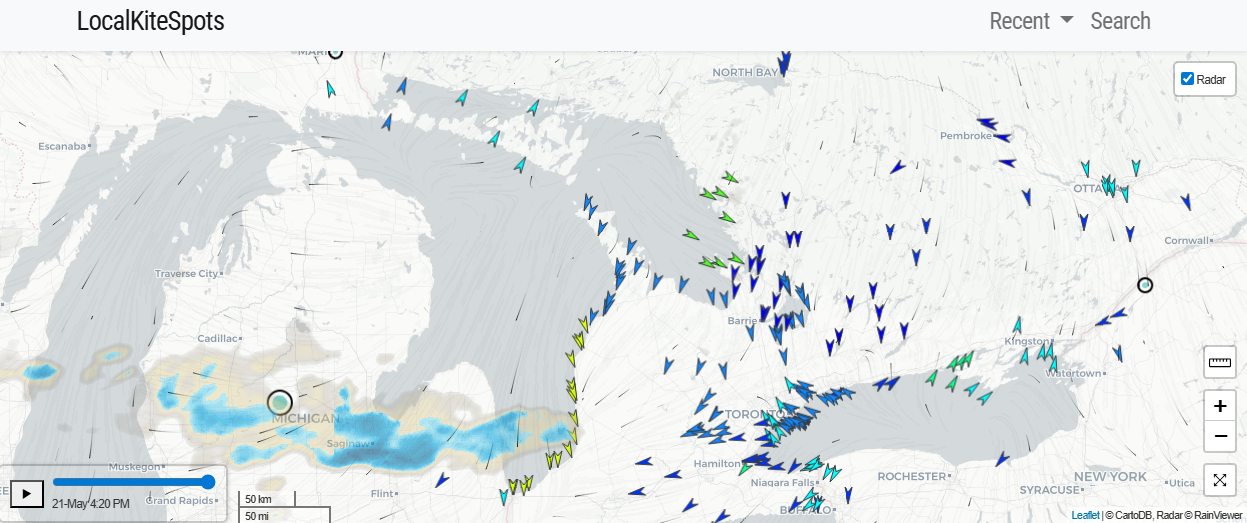
LocalKiteSpots.com has been operated by WCG since 2007. It has served as an early proving ground for many of the technologies and architectural approaches later applied to our logistics applications.
The platform is used daily by more than 500 kitesurfers worldwide to access forecast and real-time wind conditions for more than 2,000 locations.
AI Updates
In 2025, we used AI-assisted development tools to modernize and optimize the platform, including:
- Migration from the original .NET Framework to .NET Core
- Mobile optimization and Progressive Web Application (PWA) architecture
- Weather forecast and current-condition performance improvements
- Enhanced weather data processing
- New map visualizations including animated wind streamers
- Google AdSense optimization and faster page delivery
Container Number Screening
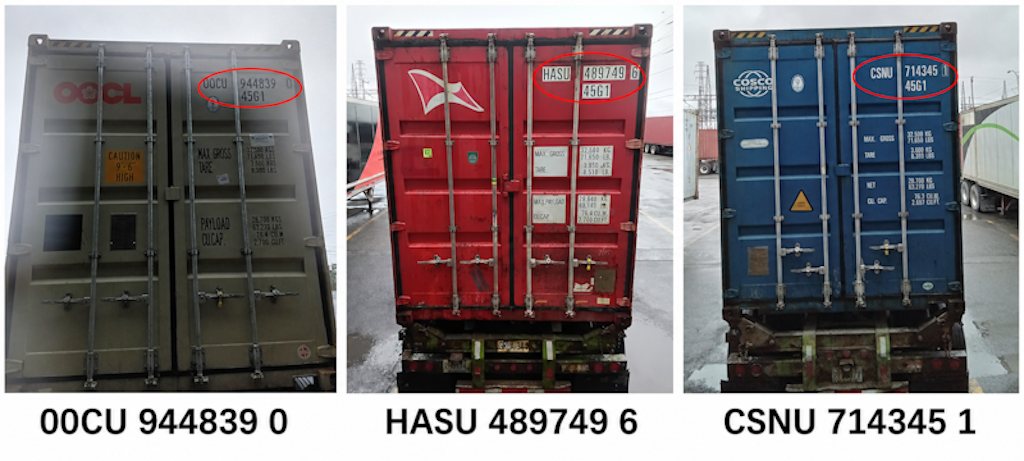
In 2023, we rolled out a text-recognition application for a logistics customer experiencing issues with mismatched container numbers on cargo paperwork.
Using image text recognition, the system captures container numbers automatically for verification and auditing against recorded shipment documentation.
The solution improved accuracy and reduced the time required for staff to identify and correct container-number discrepancies.
Parcel Screening - Dangerous Goods
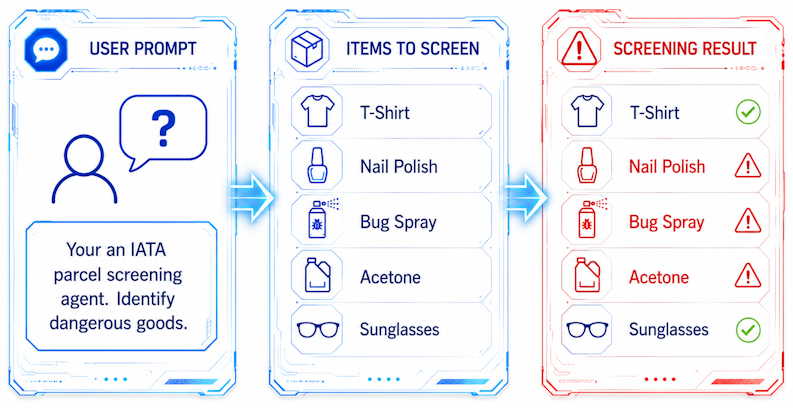
In 2026, we expanded our parcel-screening systems with AI-assisted dangerous-goods identification.
The original implementation used rule-based dictionary comparisons. We later expanded the system to leverage ChatGPT for identifying potentially dangerous goods and suspicious shipment descriptions.
Parcels identified as potentially hazardous can then be routed for X-ray, K9, or physical inspection workflows.
AI-assisted analysis allows the system to identify possible liquid contents, quantities, and dangerous-goods indicators as an additional layer of operational screening.
Our implementation also allows administrators to configure, test, and validate AI prompts for effectiveness and workflow accuracy.
Gues5ive Game
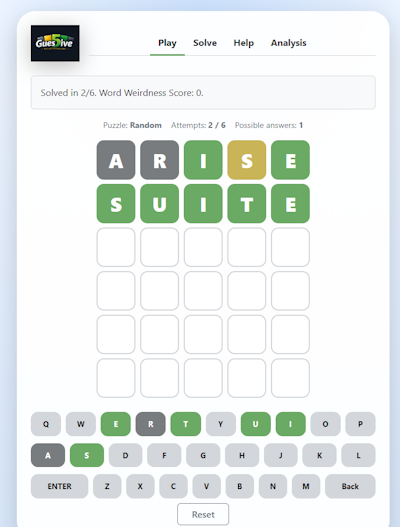
Gues5ive is a word puzzle game inspired by games such as Wordle, designed to allow unlimited play and puzzle solving.
Although WCG is not primarily a game-development company, games provide an excellent testbed for application logic, workflows, scoring systems, UI interaction, and statistical analysis.
We intentionally developed this project using AI-assisted techniques to better understand the strengths, limitations, and maintainability of AI-generated code.
The project included:
- AI-assisted generation of interface and application logic
- Guiding AI through puzzle and scoring logic development
- Development of puzzle-solver functionality
- Statistical analysis tools and custom Weird Word scoring algorithms
Codex generated major portions of the UI, game logic, and supporting utilities, including automated handling of five-letter word dictionaries and scoring systems.
The development experience provided valuable insight into how AI-assisted development can accelerate software creation while still requiring strong architectural direction, testing, and refinement by experienced developers.